19 Jul 2026
Referee Penalty Award Patterns in the Premier League: Tracking Trends for Informed Prop Selections Over Multiple Campaigns
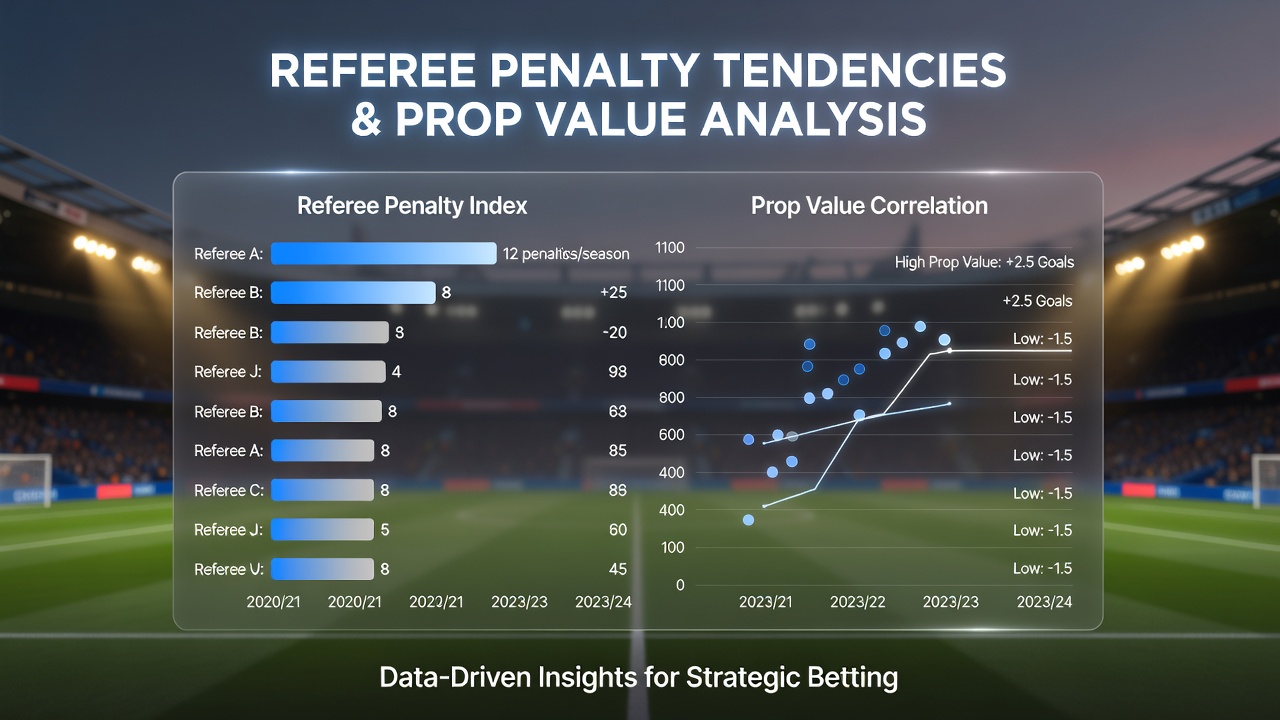
Penalty decisions have long shaped outcomes in England's top division, and analysts track referee habits across seasons to identify consistent patterns that feed into prop markets. Data compiled from official match reports shows that certain officials award spot kicks at rates well above the league average, while others maintain stricter thresholds even in high-pressure situations.
Seasonal Variations in Penalty Frequency
Records from the 2018/19 campaign through the 2024/25 season reveal that total penalties awarded each year fluctuated between 92 and 118, with spikes often coinciding with the introduction of VAR protocols. The 2022/23 term produced 109 penalties, a figure that dropped slightly before climbing again as teams adapted to new handball interpretations. Observers note that early-season fixtures tend to generate fewer awards as referees settle into their rhythms, whereas midwinter matches see an uptick when fatigue influences challenges inside the box.
Researchers examining 2025/26 data up to the winter break found a modest rise in penalties compared with the prior year, driven largely by increased scrutiny on shirt-pulling incidents. Figures released in July 2026 by league statisticians indicated that the average number of penalties per game had edged up to 0.31, continuing a gradual upward drift observed since the expansion of video review technology.
Individual Referee Tendencies
Certain match officials demonstrate repeatable behaviors that stand out when their careers are examined in detail. One referee who oversaw 28 Premier League games between 2020 and 2024 awarded 11 penalties, a rate nearly double the league norm, while another who handled a similar number of matches gave just four. These differences persist across home and away assignments, suggesting personal calibration rather than venue influence.
Breakdowns by time of season show that some officials become more lenient after the January transfer window, when squad changes alter defensive structures and increase the likelihood of desperate tackles. Data aggregated by performance analysts indicates that late-season penalties cluster around specific referees who have historically favored attacking sides in title-deciding fixtures.
Team and Fixture Context
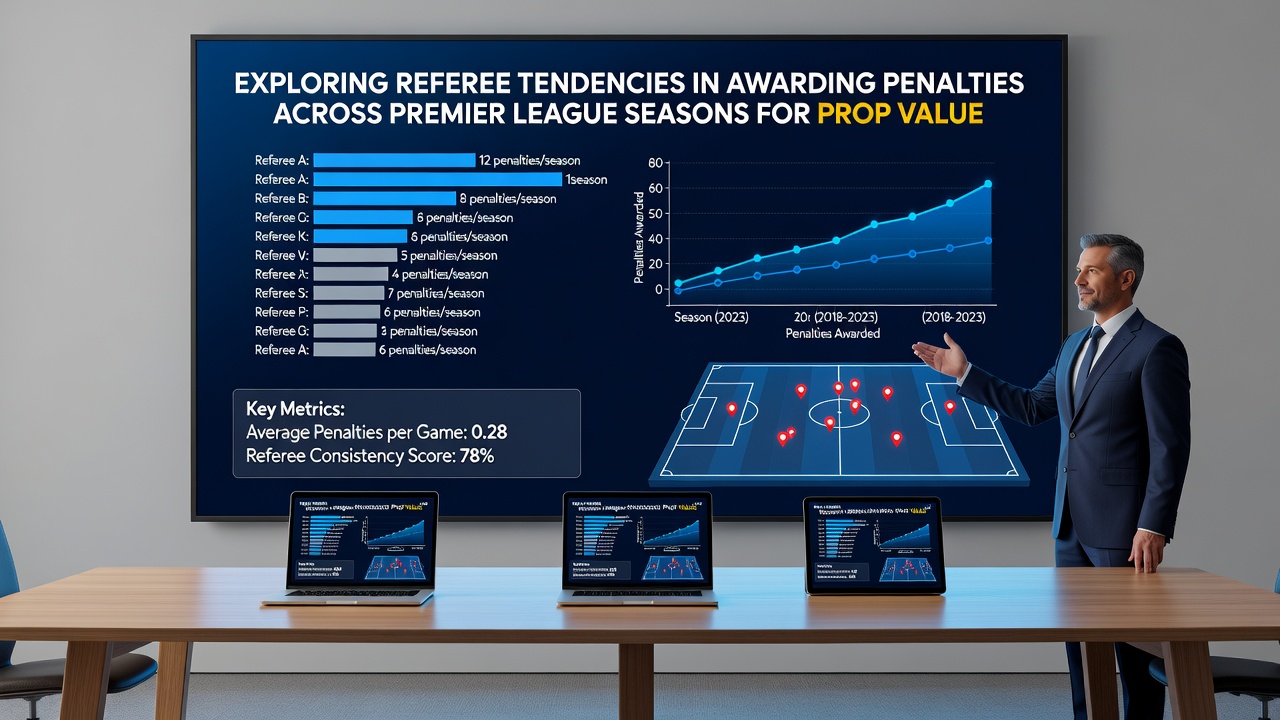
Penalty volume also correlates with playing style, and clubs that advance the ball into dangerous areas at higher rates draw more decisions regardless of the referee. Teams that rank in the top quartile for touches inside the opposition penalty area have historically received between 18 and 24 spot kicks across a 38-game season, according to league-wide metrics. In contrast, sides that prioritize set-piece defense often finish with fewer than 10 penalties awarded in their favor.
Fixtures involving newly promoted clubs produce elevated penalty counts in the opening months, a pattern linked to the adjustment period when established sides exploit unfamiliar defensive lines. Historical datasets covering the last seven seasons confirm that these matches account for roughly 14 percent of all penalties despite representing only 9 percent of total games.
Implications for Prop Markets
Betting operators publish player and team penalty-related props each week, and sharp bettors cross-reference referee assignments with historical award rates to identify value. When a high-award official is appointed to a match featuring two attacking teams, the over line on total penalties often moves quickly once the information becomes public. Conversely, appointments involving stricter referees can create opportunities on the under side, especially in low-scoring tactical battles.
Multi-season tracking also highlights which players are most likely to be involved in penalty incidents, whether as takers or as the players fouled. Forward lines that combine speed with strong finishing records inside the box appear more frequently in official penalty logs, creating repeatable edges when those individuals line up against specific defensive units.
Broader Influences on Decision-Making
Weather conditions and pitch quality occasionally factor into the equation, though their impact remains secondary to referee identity. Matches played on heavier surfaces in late autumn and winter record slightly higher foul counts leading to penalties, yet the effect size stays modest once referee adjustments are accounted for. League medical reports from 2024 onward have documented a small but measurable rise in lower-body contact injuries during these periods, which in turn influences the physical nature of challenges referees must assess.
Training academies and referee development programs have introduced targeted modules on consistency since 2023, and early indicators suggest these initiatives may narrow the gap between high- and low-award officials over time. Updated guidelines distributed ahead of the 2026/27 campaign emphasize clearer thresholds for contact in the box, a move expected to reduce variance across individual match officials.
Conclusion
Comprehensive review of penalty data across recent Premier League seasons demonstrates that referee-specific tendencies remain a stable input for prop evaluation. Teams, analysts, and market participants who maintain detailed logs of official assignments and award histories can incorporate these patterns into their assessments. As additional matches unfold, continued monitoring of both established referees and emerging officials will refine the accuracy of these projections for future campaigns.