26 Jul 2026
Pitch Dimensions Across Domestic Leagues Shape Goal Scoring Patterns in Over/Under Markets
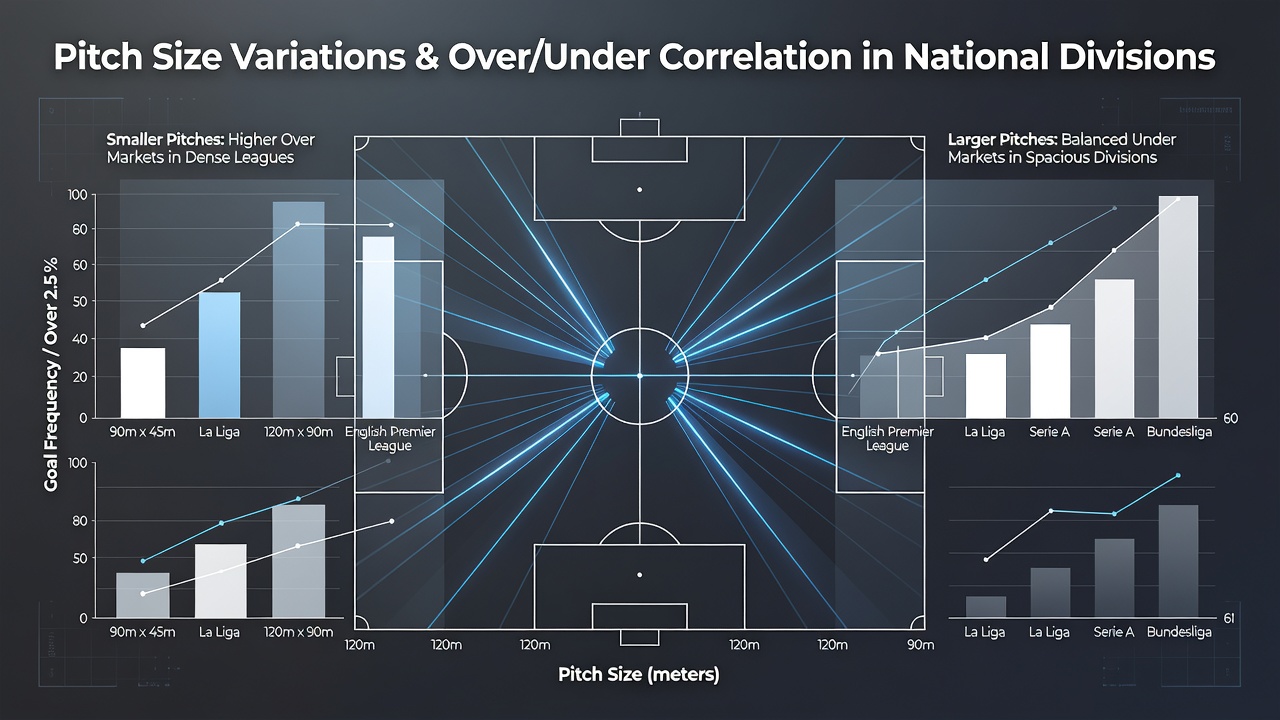
National football associations maintain pitch dimensions within FIFA guidelines yet allow noticeable variations that influence match statistics, and data collected through 2026 reveals consistent links between field size and total goals recorded in domestic competitions. Researchers tracking leagues in Europe, South America, and North America note that wider or longer surfaces create different spatial dynamics for attacking and defensive units, which in turn affects the frequency of over and under outcomes in betting markets focused on goal totals.
Standard Guidelines and Real-World Deviations
FIFA sets the international pitch length between 100 and 110 meters with width ranging from 64 to 75 meters, while national federations often select measurements at the upper or lower ends of those ranges based on stadium infrastructure and historical precedent. The English Premier League, for instance, permits clubs to use pitches measuring 105 by 68 meters at most venues, whereas several Bundesliga grounds extend to 105 by 72 meters, creating additional space along the flanks. Observers reviewing match footage from the 2025/26 season found that teams playing on the wider surfaces recorded higher average completed crosses per game, a pattern that correlates with elevated goal tallies in those fixtures.
League-by-League Comparisons Through Mid-2026
Italian Serie A pitches average closer to the minimum width in many older stadiums, and statistics compiled by league analysts show lower average goals per match during the spring months when pitches remain compact. In contrast, Major League Soccer venues in the United States frequently adopt the maximum allowable width, and records from the first half of 2026 indicate that matches on those fields produced over 2.5 goals at a rate several percentage points above the league median. Similar trends appear in the Brazilian Série A, where some coastal stadiums stretch beyond 70 meters wide, and data indicates a measurable uptick in second-half goal production compared with narrower venues in the same division.
These dimensional differences do not operate in isolation, because tactical setups, player fitness levels, and weather conditions also contribute to final scores, yet researchers controlling for those variables still identify a statistical association between increased pitch area and higher goal counts. One study published by a sports science group at an Australian university examined five seasons across multiple continents and concluded that each additional meter of width corresponded with a small but repeatable rise in total goals when other factors remained constant.
Impact on Over/Under Market Outcomes
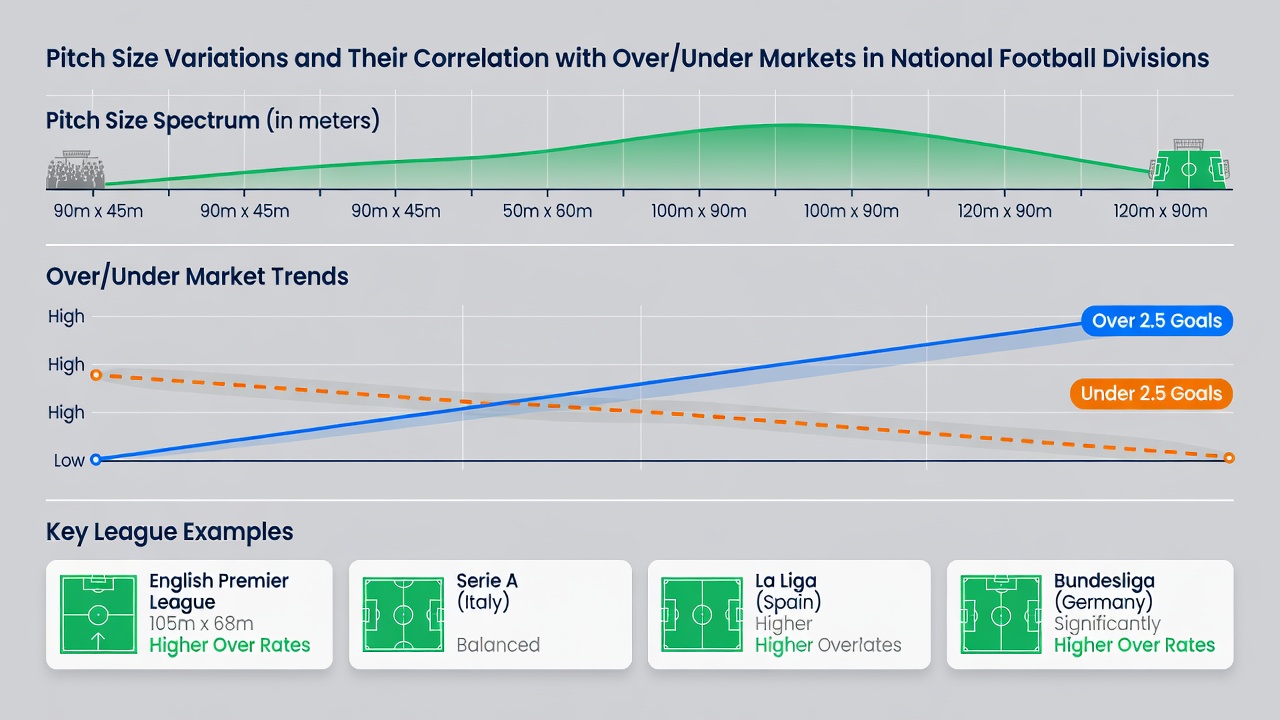
Betting markets centered on over/under goal totals respond to these patterns because bookmakers adjust lines according to historical averages at specific venues. In leagues where pitch widths vary significantly between home grounds, sharp bettors monitor venue-specific data rather than relying solely on team form. Figures released by European football analytics platforms in July 2026 showed that fixtures played on pitches exceeding 70 meters in width produced over 2.5 goals in 54 percent of matches, compared with 47 percent on narrower surfaces within the same competitions.
Defensive strategies also shift with available space, and teams accustomed to compact pitches often struggle when traveling to wider venues, resulting in more open play and additional scoring opportunities. Analysts reviewing video and tracking data from the UEFA Champions League qualifiers noted that sides from leagues with smaller average pitch sizes conceded more goals from wide areas during away legs on larger fields. This venue-driven effect appears most pronounced in the later stages of matches when fatigue reduces pressing intensity and leaves gaps that attackers exploit on expansive surfaces.
Additional Factors Interacting with Pitch Size
Grass length, surface hardness, and irrigation practices interact with dimensional differences, and groundskeepers in warmer climates often maintain shorter grass on larger pitches to encourage quicker ball movement, further supporting attacking play. Data from South American confederation reports indicates that matches on well-irrigated, wider pitches in evening kickoffs during July record elevated goal rates compared with daytime fixtures on the same surfaces. Temperature and humidity levels recorded during those games also factor into models used by statistical services that supply information to betting operators across different regions.
National associations continue to review pitch specifications ahead of each season, and several federations announced minor adjustments for the 2026/27 campaign based on injury data and performance metrics collected through the previous year. These incremental changes remain within FIFA tolerances yet contribute to the ongoing variation that market participants track when evaluating over and under probabilities.
Conclusion
Pitch size variations across national divisions produce measurable effects on goal totals that appear consistently in aggregated match data through mid-2026. While multiple elements influence final scores, the spatial characteristics of each venue form a stable variable that analysts incorporate into predictive models. Those examining over/under markets therefore review venue dimensions alongside team statistics to identify patterns that hold across different leagues and seasons.