2 Aug 2026
Betfred Plans Major Shop Closures Across the UK as Tax Pressures Mount

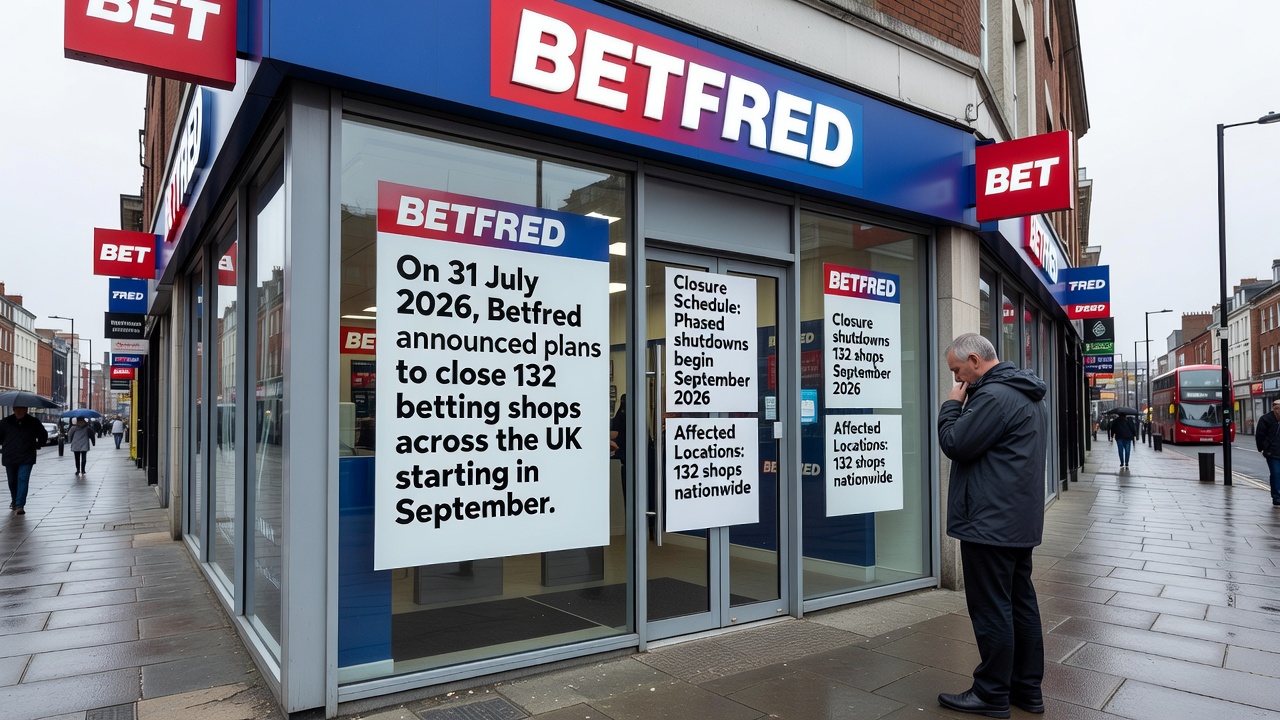
Betfred announced on 31 July 2026 its intention to close 132 betting shops throughout the United Kingdom beginning in September 2026 while eliminating more than 600 positions, and the decision stems directly from elevated gambling taxes introduced in the prior Budget along with ongoing economic uncertainty that continues to affect the sector. The company will trim its UK retail footprint to approximately 1,100 locations once the process concludes.
Details of the Announced Reductions
The closures represent a significant contraction for the bookmaker whose physical presence has long formed a core part of its operations across towns and cities, and observers note that the timing aligns with the start of September when the first batch of affected sites will begin winding down. Employees at those shops face redundancy, with the total job losses exceeding 600 across multiple regions. Company statements indicate that remaining outlets will continue to operate under adjusted cost structures designed to offset the higher tax burden.
Economic Factors Driving the Decision
Higher rates of gambling taxation enacted in the previous Budget increased operational expenses for high-street bookmakers, while broader economic uncertainty has weighed on customer spending patterns in recent months. Betfred cited these twin pressures as the primary reasons behind the scale of the cuts, and the firm explained that sustaining the current number of outlets had become unsustainable under the new fiscal conditions. Data from the announcement shows that the reductions will lower the total estate by roughly 10 percent from its pre-closure level.
Consequences for British Horseracing Funding
The closures carry secondary effects for British horseracing, which relies on contributions from betting operators through the Levy Board mechanism, and analysts calculate that the reduction in Betfred shops will remove approximately £4 million annually from the funding pool that supports prize money, training, and racecourse infrastructure. Industry participants have tracked these financial flows for years, and the loss arrives at a moment when the sport seeks to maintain competitive standards amid shifting revenue streams. Those who monitor racing economics point out that retail betting has historically supplied a stable portion of Levy receipts even as remote channels have grown.
Industry Group Response and Warnings
The Betting and Gaming Council issued a statement describing the Betfred closures as a direct outcome of the tax increases, and the organisation warned that additional job losses, diminished investment in high-street locations, and expansion of unregulated black-market activity could follow if similar pressures persist across other operators. The BGC statement on Betfred closures highlights data showing how tax rises translate into reduced retail footprints, and it urges policymakers to consider the cumulative impact on employment and regulated market integrity. Figures released alongside the announcement place the expected annual horseracing funding shortfall at £4 million, underscoring the interconnected nature of retail betting and the sport's financial model.
Timeline and Next Steps in August 2026
With the announcement made on the final day of July, August 2026 serves as a transition period during which Betfred will finalise closure schedules and begin consultations with affected staff, and company representatives have indicated that the process will unfold in phases starting the following month. Local authorities and community groups in areas slated for closures have begun reviewing the implications for town-centre footfall, while the remaining 1,100 shops prepare for continued trading under the revised tax regime. Observers expect further details on specific site closures to emerge during the coming weeks as the September start date approaches.
Broader Market Context
The retail betting sector has faced structural shifts for more than a decade as online platforms captured larger shares of wagering activity, yet physical shops continue to serve customers who prefer in-person transactions and community interaction. Betfred's decision illustrates how recent tax changes interact with those longer-term trends, and the resulting contraction affects both direct employment and the ancillary economic activity generated by shop operations. Statistics compiled by industry bodies show that each retail outlet supports a network of suppliers and local services, and the loss of 132 locations removes those contributions from numerous high streets simultaneously.
Conclusion
The sequence of events set in motion on 31 July 2026 will reshape Betfred's UK presence and ripple through associated industries, with the reduction to roughly 1,100 shops and the elimination of more than 600 roles marking a measurable adjustment in the high-street betting landscape. The £4 million annual impact on horseracing funding and the concerns raised by the Betting and Gaming Council regarding further job losses and black-market growth provide additional context for stakeholders tracking regulatory and economic developments. As September closures commence, the outcomes will offer concrete data on how the sector adapts to the prevailing tax and market conditions.